Wind-Driven Rain and Roof Leak Damage in Tracy, CA
The west wind that pours through the Altamont Pass drives rain sideways into flashing, vents, window frames and stucco. The restoration team finds where it got in, dries the attic, ceiling and walls, and documents the damage.
(888) 774-9605Rain coming through in Tracy? Call now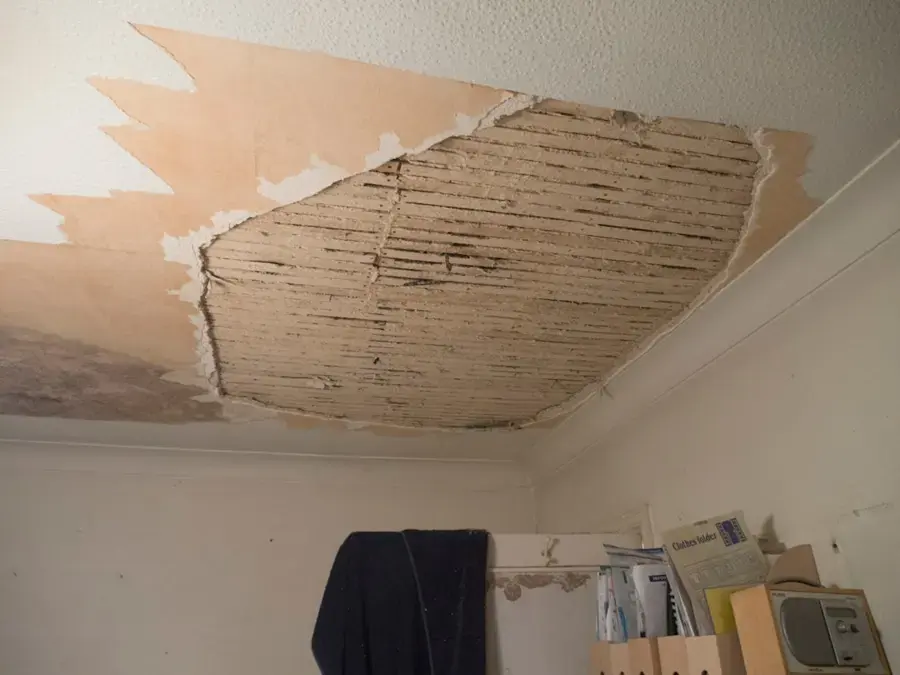
First steps for wind-driven rain and roof leak damage in Tracy
- 1
Put a bucket under the leak and move furniture and electronics away from it.
- 2
If the ceiling bulges, keep clear; do not push on it from below.
- 3
Photograph the stain, the attic if you can see it safely, and the outside wall or roof.
- 4
Get the opening covered and the drying started before the next storm band.
How wind-driven rain and roof leak damage is handled in Tracy
- Step 1
Map the moisture
The tech who does the walkthrough maps moisture with thermal imaging and pinless meters before any equipment goes down.
- Step 2
Extract the water
The extraction crew pulls standing water with truck-mounted extraction so it leaves the building instead of moving to the next room.
- Step 3
Set the drying
The drying team sets air movers to each room's evaporation load and runs LGR dehumidifiers to pull that moisture back out of the air.
- Step 4
Verify and document
Readings are logged daily until wet materials sit within 2 to 4 points of a dry reference, and the claim file gets the logs and photos.
What does wind-driven rain and roof leak damage cost in Tracy, CA?
In Tracy, CA, wind-driven rain and roof leak water damage typically runs $900 to $6,000, depending on how much ceiling, insulation and wall area got wet, whether drywall has to come down and how long the water ran.
One ceiling spot
$900 to $2,000- Attic and ceiling check
- Drying in place
- Daily readings
Ceiling and wall
$2,000 to $4,000- Wet insulation removal
- Cavity drying
- Tarping if needed
Several rooms
$4,000 to $6,000+- Ceiling drywall removal
- Extended drying
- Full claim file
For a closer planning number, try the water damage cost calculator. A firm price comes from the restoration company after it sees the damage.
Tracy sits at the east foot of the Altamont Pass, and the wind that funnels through it is strong enough that the hills above town carry rows of wind turbines. In a winter storm that wind pushes rain sideways and even upward. Water gets past roof flashing, under tiles and shingles at the eaves, through attic vents, around window frames and into cracks in stucco walls, often on the west and south faces of the house.
How wind-driven water shows up inside
- Ceiling stains near exterior walls, often after a storm with strong west wind
- Water at the top of a window frame or running down the inside of the wall below it
- Wet attic insulation near vents or where two roof planes meet
- Bubbling paint or soft drywall on the windward wall
Drying from the attic down
Roof and wall leaks are usually Category 1 water at the start, but they soak materials that dry slowly. The tech who does the walkthrough checks the attic, the ceiling and the wall below with meters and thermal imaging. Wet blown-in insulation is usually removed because it compacts and holds water. Ceiling drywall that sagged or broke is taken down; ceilings that are only damp are often dried in place. Where water ran down inside a wall, the drying team opens small access points and dries the cavity.
A roofer or window contractor fixes the entry point. Drying the structure before that repair is finished is still worth it, but the restoration team tarps or seals openings first when more rain is on the way.
Storm damage and the claim
Insurers look closely at whether water entered through storm damage, such as a lifted shingle or a broken vent, or through long-term wear. Photos of the exterior and the entry point, a moisture map and daily readings all help. The National Weather Service Sacramento office keeps wind and storm records for the Tracy area, and Ready.gov winter weather tips cover storm preparation.
Wind-Driven Rain and Roof Leak Damage coverage across Tracy
The restoration team handles wind-driven rain and roof leak damage in every Tracy ZIP and the neighboring San Joaquin County communities.
The restoration team covers all of Tracy, from the downtown grid and Ellis to Tracy Hills, plus Mountain House, Banta, Vernalis, Lathrop and Manteca.
ZIP codes 95304, 95376, 95377, 95378 and 95391.
See every area coveredRelated water damage services in Tracy



Wind-Driven Rain and Roof Leak Damage questions
Why does rain get in only when the wind blows?
Roofs, windows and stucco are built to shed rain falling down. Strong wind drives water sideways and upward, past flashing, vents and window seals, so a house that stays dry in normal rain can leak in a windstorm.
Does wet attic insulation have to be replaced?
Blown-in insulation that got soaked usually compacts and loses its value, so it is removed. Batts that are only damp can sometimes be dried.
Can a stained ceiling be dried in place?
Often, yes. If the drywall is still firm and flat, it can be dried with air movers and dehumidifiers. Sagging or broken ceiling drywall is taken down for safety.
Who fixes the roof or window?
A roofer or window contractor repairs the entry point. The restoration team tarps or seals openings when needed and handles the drying and documentation.
Is wind-driven rain damage covered by insurance?
Water that enters through storm damage is often treated differently from leaks caused by wear. Coverage depends on your policy, so it is worth checking with your own insurer.
Which side of a Tracy home leaks most?
The west and south faces take the brunt of storm wind in Tracy, so leaks around windows, vents and stucco on those walls are the most common.
Rain coming through a ceiling or window in Tracy?
Every storm band adds water to the attic and walls. The restoration team covers the opening, dries the structure and documents the damage.